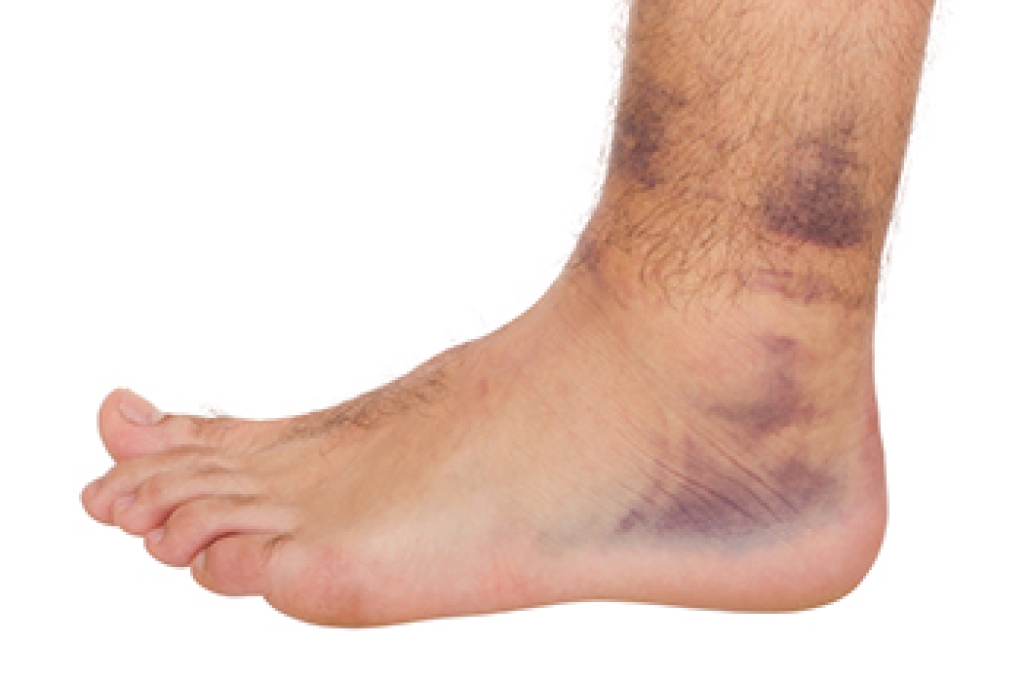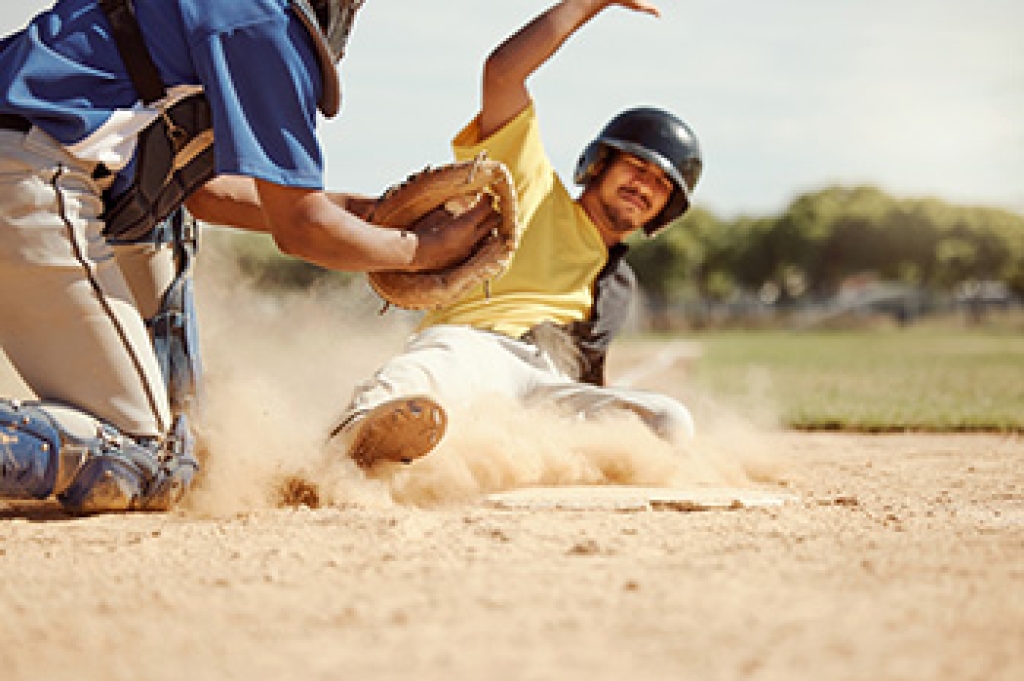
Baseball involves running, sliding, and quick turns that place strong stress on the feet and ankles. Baseball-related injuries occur when a player twists an ankle while rounding a base, lands awkwardly after a jump, or is struck by a fast-moving ball. Other problems include ankle sprains, which happen when the ligaments that hold the joint together stretch or tear, and fractures, which are cracks or breaks in the bones. Sliding into bases can lead to painful impacts or skin injuries around the toes and heels. Cleats that do not fit well may cause blisters, nail damage, or nerve pressure that affects comfort and balance. A podiatrist can examine the injury and order imaging tests to determine its severity. Treatment includes supportive bracing, protective devices, or custom shoe inserts to improve stability and recovery. If you have sustained a foot or ankle injury while playing baseball, it is suggested that you make an appointment with a podiatrist for an exam, diagnosis, and treatment.
Ankle and foot injuries are common among athletes and in many sports. They can be caused by several problems and may be potentially serious. If you are feeling pain or think you were injured in a sporting event or when exercising, consult with one of our podiatrists from Lakeside Foot and Ankle Center. Our practitioners will assess your condition and provide you with quality foot and ankle treatment.
Common Injuries
The most common injuries that occur in sporting activities include:
- Achilles Tendonitis
- Achilles Tendon Rupture
- Ankle Sprains
- Broken Foot
- Plantar Fasciitis
- Stress Fractures
- Turf Toe
Symptoms
Symptoms vary depending upon the injury and in some cases, there may be no symptoms at all. However, in most cases, some form of symptom is experienced. Pain, aching, burning, bruising, tenderness, tightness or stiffness, sensation loss, difficulty moving, and swelling are the most common symptoms.
Treatment
Just as symptoms vary depending upon the injury, so do treatment options. A common treatment method is known as the RICE method. This method involves rest, applying ice, compression and elevating the afflicted foot or ankle. If the injury appears to be more serious, surgery might be required, such as arthroscopic or reconstructive surgery. Lastly, rehabilitation or therapy might be needed to gain full functionality in the afflicted area. Any discomfort experienced by an athlete must be evaluated by a licensed, reputable medical professional.
If you have any questions please contact our offices located in Leesburg and The Villages, FL . We offer the newest diagnostic and treatment technologies for all your foot and ankle needs.